Protected: Change, Resilience and Mental Health
14 11 2017Comments : Enter your password to view comments.
Tags: behavioral health, value
Categories : Uncategorized
Health Care Sharing: Hacking Insurance?
20 09 2017Employer based health insurance is a curious fixture of the US health system. With approximately 56% of Americans covered under some type of insurance through their employer, we’ve come to accept this system as a given for most of us. Private payers control 33 percent of all the expenditures for healthcare, which translates (very roughly) into controlling six percent of the entire economy. Health insurance is a relatively new invention, beginning in 1929 as a means of managing the costs of an extended hospital stay. It became a fixture of employment during World War II. It has evolved into a massive industry with an outsized impact on the fortunes of Americans as it is a significant part of the total compensation package for employees.
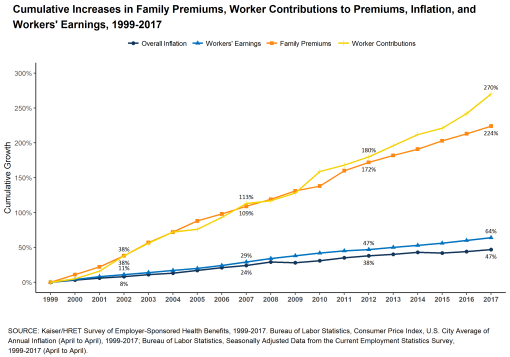
The annual premium for family coverage in employer sponsored plans rose an average of three percent to $18,764 this year. While this is relatively modest growth compared to some of the increases we’ve seen from the Obamacare exchanges, these increases still outpace inflation and workers’ wage growth and premium increases are much higher for smaller businesses. And similarly, while there are many drivers of cost in the healthcare system, the administrative overhead to simply manage the commercial insurance system accounts for a significant percentage of every dollar paid in premiums. Regulations in the Affordable Care Act (ACA) set the Medical Loss Ratio (MLR) for commercial health insurers at 15% of premiums (for large group policies), mandating that 85 cents from every dollar must be paid for patient care. Similarly, the average physician’s office has a ratio of one to three administrative staffers to every full-time physician. Quite simply, a huge amount of overhead is devoted to the business of insurance: claims authorization, submissions, reimbursement, collecting from patients, etc.
As one thinks about “hacking healthcare,” hacking the traditional insurance model is clearly a possible point of leverage. Health Care Sharing Ministries may not be for everyone, but they exemplify a novel and community-driven approach to managing the cost of care. Health Care Sharing Ministries, or HCSMs, began with faith-based communities and were a means for like minded people to pool funds together to share in the cost of healthcare. In many ways they are the descendants of the “mutual aid” societies that flourished during the early 20th century. In keeping with their roots as ministries, most of these organizations require some statement of faith (typically Christian), adherence to principles of individual responsibility for one’s health and charity towards others. Most have a closed membership, like Mennonite/Old German Baptist communities, but some are open to the broader, and in some cases, the secular public.The trade organization representing some of the largest ministries reports that almost 1,000,000 people in the US are covered under some type of HCSM.

It is important to be clear that these arrangements are not presented as health insurance even though they have a similar financial structure. HCSM organizations are not overseen by state governments, so typical insurance regulations about funding reserves, reinsurance, etc. are not applicable to them, although in order to be recognized as an HCSM by Health and Human Services under the ACA, these organizations must be regularly audited by a CPA for solvency as well as other specific requirements. Members in these types of faith-based organizations that meet the requirements would be exempt from the Affordable Care Act mandate to maintain traditional individual health insurance.

Photo by Nina Strehl on Unsplash
HCSMs typically operate by having members identify as “self-pay” at the provider of their choice. Once the service or treatment is rendered, the provider bills the member directly as though they were uninsured. The member then submits the bill to the HCSM organization that will review the bill to see if it is within their “shareable” coverage. If it is, the HCSM organization will advocate on behalf of the member to negotiate the most favorable rate for the service and then pays the member directly, who then would reimburse the provider. Typically, there is some “personal responsibility,” or what we might call a deductible in health insurance language, for the incurred charges but then the HCSM would pay for the balance. Each ministry’s rules are slightly different with some items covered and others not, but the coverage can look very much like insurance and typically have significantly lower monthly costs.
|
By pooling like minded individuals together to manage healthcare costs, HCSMs can attract a generally healthy selection of the population and by engaging members more directly in the discussions about the cost of treatment may be making them better consumers as well. Some ministries encourage mutual support and even prayer for members suffering from illness. This kind of community involvement may not appear to have measurable clinical impact, but it’s really not all that different from wellness programs that try to affect population health. A key element of the HCSM arrangement is the negotiation of rates with the provider. A ministry that pays every provider at “retail” uninsured rates (which can often be astronomically high compared to the negotiated rates of a public or private payer) is going to struggle with member costs and solvency. Policies and coverage vary greatly among HCSMs, so consumers should choose carefully. There have also been HCSM failures and missteps with members, but overall HCSMs generally have high rates of member satisfaction.
Want to go deeper on this issue? Contact me for a white paper on this concept that also includes:
- How elements of Health Care Sharing Ministries could be leveraged in other alternative coverage arrangements and what those models could look like
- In alternative models, what considerations need to be addressed for managing growth and member engagement?
- Operational strategies for cost management
- Management of social determinants of health for better outcomes
Comments : Leave a Comment »
Categories : Uncategorized
“Hacking” Healthcare
8 09 2017
[Photo: Mayberry Health and Home]
I wish I had thought of this title before anyone else, but there is a book, scores of domains registered already, a lot of hand-wringing about evil hackers and I’m sure, a lot of events like this where people will try to hack healthcare to win contests. But this article isn’t really going to be about any of those things. This will be the first of a series of articles about how communities, thinkers and smart startups are taking back control of their healthcare.
Why does healthcare have to be hacked? In case it wasn’t painfully obvious, the state of healthcare in the US in 2017 is in basically the same shape that it has been for some time: too expensive, mediocre in terms of outcomes and nowhere near as safe as it should be. Compound that with epic gridlock in Washington and it becomes clear that these problems won’t be easily solved via policy. And yet, these constraints are forcing creativity. Think of it as the DIY movement in healthcare. In art, engineering and just about every endeavor, DIY is a concept that is near and dear to my heart and I want to celebrate it when it happens in healthcare.
So, let’s start with AI. So much hype.

Despite this hype, there is plenty to work with. While yes, AI is getting better at looking at x-rays or suggesting treatment options to physicians, the real value today comes from augmenting rather than replacing the caregiver. While teaching myself API.AI for a non-healthcare related project, I could see first hand the value of well designed tools to extend the caregiver relationship, leveraging the principles of CRM as well as the challenges inherent in training them. I like the chatbot, even though they still have a ways to go. Chatbots are hard to build well. If you’ve interacted with one, you likely figured it out pretty early on and hated it. But the technology is getting better and you will likely be engaging with many more bots at your work or when you are applying for a job.
Some excellent use cases for bots include: improving adherence with provider recommendations (medication, diet, exercise) by gently nudging the patient via text messages to their phone or Facebook Messenger. Yes, HIPAA is hard. But it’s not insurmountable with a well crafted strategy. Also, most patients aren’t worried about the occasional reminder to eat better or work out via their phone after they leave the doctor’s office. And they work.

Another use case I love is augmenting a therapist for treating minor depression and other low-acuity behavioral health issues. Why aren’t we creating pathways for patients to get screened for depression in their doctor’s office and handed to an appropriate resource that doesn’t have to be the PCP? We know that depression is often associated with other chronic illness and that depression can prevent patients from adhering to medication and treatment plans, or just not showing at their doctor appointments. We also know that one-third of the adults that have major depressive episodes never see a professional. In addition to the costs of untreated illness, millions are needlessly suffering.
Here’s a hack worth doing: evidence-based chatbot tools overseen by a team of clinicians and technologists, regularly monitoring that the AI is providing quality support to patients and that it is aligned to their care plans and appropriately linked to technology.

If you read this far and you’re of a certain age and time, then maybe you’ll get this reference. At least it’s not stock photography of people in lab coats in front of computers.
Comments : Leave a Comment »
Tags: AI, hack
Categories : disruption, hack, value, wellness
Value Based Payments 101 – Bundled Payments
17 05 2013
Source: http://www.flickr.com/photos/opensourceway/
Value Based Payment 101: Bundled Payments
In order to dive into value based payments, we need to first understand how health care is commonly paid for today and why many believe this needs to change to improve health care. Today, most health care is paid for by private health insurance, public health insurance (Medicare/Medicaid) or by the individual, out of pocket as fee for service, essentially paying on a per procedure basis. If you go to your doctor for a simple issue like a sore throat, there’s a line item for the office visit and exam, a line for the procedure to swab your throat, the lab fee for someone to look at the swabbing and if necessary, the prescription that needs to get filled to cure your sore throat.
This happens in a exponentially more complex fashion if you go to the doctor and she determines for example, that you have an issue with your heart and refers you to a cardiologist, who then recommends a surgical procedure at your local hospital. Every item is billed to someone on a line by line basis. It’s this complexity that was the subject of the recent Time article. But to take this further, let’s say you have to be readmitted to the hospital a week after being discharged and you spend 5 extra days in the hospital, requiring treatment by new specialists as well as your cardiologist. Who pays? Today, the payer has to cover the costs of what was a potentially avoidable readmission. To be fair, people are readmitted to hospitals regularly for reasons that are not anyone’s fault, but the causes of many readmissions are preventable and the costs are real. For example, 20% of all Medicare patients are readmitted to the hospital within 30 days of discharge at a cost of $18 billion a year, not to mention the risks and impact of any hospital admission on the patient and their family.
So, how do you get this to change? Well there are carrots and sticks. First, the stick. One example is that the Center for Medicare/Medicaid Services or CMS, has started a Readmissions Reduction program that was conceived as part of the health care reform legislation. In this program, officials are reviewing the number of heart attack, heart failure and pneumonia patients who return to the hospital within 30 days of discharge. Hospitals with more readmissions than Medicare expected given their mix of patients are penalized by losing up to 1 percent of their regular payments, with penalties going up in coming years. Over 2,000 hospitals are currently expected to be impacted by reduced rates. You can see the latest list of hospitals and their readmission rates here. Readmission rates are coming down already, some say in direct response to the program.
Another approach to improving quality and efficiency is through “bundled payments” that are meant to encourage cooperation between all members of the medical team. As per my example, for a hip replacement Medicare typically pays a fee to the anesthesiologist, the surgeon, the nurses, radiologists, the hospital, suppliers etc. Under bundled payments, one sum is paid for the entire procedure based on historical data. The goal of bundling payments is to create an incentive for all those groups to work together and find efficiencies including negotiating rates with suppliers that allow the surgery to cost less than the bundled amount and share the savings as a profit to be shared among the team members. That’s the carrot.
The main problems with bundled payments are that some diseases like diabetes are hard to lump into episodes that lend themselves to bundled approaches. However, many procedures and illnesses can be, like cardiac procedures and hip replacements. So, while it may not be immediately feasible for all illnesses, it certainly can be for some. Another issue is that there are not many providers that are willing to accept this level of risk. This is changing as the successes that are being seen in gain more visibility. Finally, a third reason for not doing bundled payments is the lack of software that accommodates this type of billing. Virtually all health care billing software is designed to handle traditional fee for service approaches today, but that is a function of the fact that almost all billing is fee for service today. The market will most certainly meet this need if and when it is necessary.
More Reading
Taking value even further when looking at new technologies and drugs.
Lessons from Medicare’s Demonstration Projects on Value-Based Payment (Congressional Budget Office)
Comments : Leave a Comment »
Tags: medicare medicaid, private health insurance, public health insurance
Categories : health care reform, pay for performance, payment, Uncategorized, value
The Primer Series
16 05 2013 http://www.flickr.com/photos/opensourceway/
In my experience, health care can be a jargon rich environment that can isolate outsiders through the use of terminology and language which does not always readily lend itself to open inspection. To be fair, health care is the epitome of complex subject matter with people’s lives at stake, so oversimplification can be dangerous. Acknowledging that, I still do have to point out that many of the principles of how health care is delivered and paid for are like any other defined process: there are inputs, in this case, people with a variety of health needs from the minimal to the acute and there are activities that hopefully add value, i.e., the absence of illness that lets people live the lives they deserve, and all those who add value (doctors, hospitals, manufacturers) should benefit.
In the spirit of helping the lay reader understand some of this, I will be taking a selected industry trend and hopefully making it less opaque. Some of my peers may find this rudimentary and tedious; on the other hand, some may be secretly relieved to find a simple explanation for a concept which it is sometimes assumed everyone knows already. Plus, it helps me distill my reading and interest into a less amorphous whole. So, with that out of the way, I give you the first in a series of primers in health care with an explanation of value based payment, starting with bundled payments. Look for it tomorrow.
Comments : Leave a Comment »
Tags: payment, primer, value
Categories : Uncategorized
Back in the saddle, and a quick factoid…
5 05 2013I have decided that it is time to start updating this blog again. There are a lot of great projects and ideas out there right now and I can’t help but trumpet them. In the past couple of years we have seen the passage of the Affordable Care Act, aka Obamacare, huge leaps in health information technology and some really great thinking around patient engagement. I can’t help but comment on these and more. I will try to get out something every couple of days. As always, my opinions are my own.

What’s tougher than riding a moose? Just ask Teddy Roosevelt
Who was the first president to try to reform health care?
Teddy Roosevelt was actually the first president to come out as a proponent for universal health care coverage. Roosevelt, running as a third party candidate, announced his support for this during a time of Progressivism in American politics (great reading, the history around the late 1920’s and 30’s, by the way). Given the mood of the country, this idea had HUGE likelihood to actually be enacted when Roosevelt was elected. In fact, the American Medical Association was supportive of it as well as many influential lawmakers.
It wasn’t really conservative politics that led to its demise. It was the ultimate bummer, World War I, which was one of the primary reasons for universal health care to be scuttled. Roosevelt had actually borrowed the idea from Germany, whose head of state Otto Von Bismarck had actually enacted this type of coverage in Germany. However, the United States’ opposition to Germany even before it entered the war made it quite unpopular to be associated with anything German.
Ironically, another key factor that contributed to the downfall of Roosevelt’s plan was that it was not supported by American Labor, which was perhaps at its strongest point in its history. The movement rallied behind their leaders, particularly Samuel Gompers, who felt that it could actually negotiate better terms for their members by working with employers than they could have by negotiating with the government.
Amazingly, this this time was actually the most supportive in all of US history for such an effort and ultimately, progressive labor could be said to have shot itself in the foot long-term in this instance
Comments : Leave a Comment »
Categories : health care reform, history, insurance, obamacare
Housecalls, baby!
29 12 2011Direct Primary Care is the future of medicine. With insurance premiums spiraling out of control, more and more people are looking for the least expensive alternative to traditional insurance. It’s the classic problem of insurance. How much insurance do you need if you are in reasonably good health? Actuaries will tell you, for example, that a traditional health insurance plan with high premiums, low co-pays for doctor visits and prescriptions doesn’t really make financial sense for say, a 25 year old male in good health (it makes more sense for a woman of the same age, who should be getting annual exams and has the possibility of getting pregnant). He’s unlikely to see a doctor unless he’s seriously ill, doesn’t want to spend a lot of time in a heavy consult with his doctor and certainly doesn’t want to hassle with the average wait time to see his doctor. His doctor, similarly, is not likely to be stumped by the average ailment for this person and if she suspects its a common illness going around (like the flu), she’s likely to prescribe bed rest and plenty of fluids, and probably only do a diagnostic test out of obligation instead of necessity. Hardly a case of House, M.D. Compare this with the same guy with a bad case of the sniffles stopping off at the Minuteclinic (or, the Wal-Mart), waiting 15 minutes to see a nurse practitioner with automated tools at his disposal. In about 15 minutes, the nurse has checked our guy’s blood pressure (it’s fine, he’ll want to check it more often after his 30th birthday), determined our 25 year old has a sinus infection and prescribed an antibiotic our patient can pick up in 15 minutes by walking across the store (and maybe picking up a bottle of Gatorade and a Snickers as an anodyne to his misery). The whole affair is addressed in less than an hour.
Oh, and he paid $35 for the visit by swiping his card at the nurse’s terminal. And $25 for the prescription. And the whole visit including diagnosis and prescription can be captured electronically and saved in our patients’ personal health record like MS HealthVault or similar, so should this be part of a chronic problem, it can be shared with all the medical providers he may visit in the future.
The time involved with a traditional doctor’s office visit almost certainly took longer, then the patient has to travel to another location to pick up the prescription that maybe the doctor sent ahead, or maybe it’s on a little piece of paper that the pharmacist has to put in the queue. Then, there’s the small army of staff in a doctor’s office. Their main purpose: to wrangle the myriad of paperwork for a whole variety of health insurance plans, engaging in the back and forth with the payer to get reimbursed and pass bills on to those patients who either don’t have insurance or have enough insurance. It’s all about the administrative overhead. Is this for everyone? Definitely not, but not only will this approach make sense for those in reasonable health (paired with some form of catastrophic insurance), but also those with chronic diseases that require close management.
Or, maybe the doc comes to you. Why isn’t this happening, then? It will and it’s probably closer than you think. As more and more people are becoming active consumers of healthcare services, we will see more uninsured (and insured) people trying out MinuteClinics, (maybe) Wal-Mart, MedLion or a handful of similar concepts. I’m waiting for a single entrepreneurial medical professional to figure out how to safely care for people from a roving van, armed with a few key medical instruments, a cell phone and a laptop.
Comments : Leave a Comment »
Categories : consumer, direct primary care, disruption, health insurance, HSAs, insurance, small business, technology, uninsured, wellness
Dispatches from the Field, 2/25/08
26 02 2008For better or worse, these are the kinds of hard discussions we have to have as we look at our options for the ailing healthcare system:
Prevention is Good Medicine, but it’s Not a Fiscal Panacea
Prevention saves lives; it is the right thing to do. But prevention does not save money
http://blogs.usatoday.com/oped/2008/02/prevention-is-g.html
One of my favorite economists is Dean Baker. His “Beat the Press” Column tackles the ignorance and hidden agendas in economics. As you can imagine, there’s a lot of material when the issue is the economics of healthcare!
When it Comes to Health Care the NYT Is Protectionist
Just yesterday the NYT editorial board was complaining about the threat of protectionism in discussing Senator Obama and Clinton’s trade policies. Today, the editorial board discusses Medicare’s financial problems and never once mentions the extent to which this is caused by protectionism.
The basic point is very simple. Every other wealthy country provides high quality health care at a far lower price than in the United States. If we want to lower cost then an obvious way would be to try to take advantage of these lower cost systems. It is easy to develop mechanisms that would allow for Medicare beneficiaries to take advantage of lower cost systems.
The argument for the gains from trade in medical services is exactly the same as the argument for gains from trade in cars and clothes (we can even use the same graph, we just have to relabel the axis), except the benefits are likely to be much larger in the case of medical care. It is inconsistent for the NYT to be so committed to eliminating trade barriers in manufactured goods but willing to tolerate much costly barriers to trade in medical services.
In the interest of full disclosure, it should be noted that I am working on the Austin health insurance program mentioned in this article.
Texas Urban Areas Work to Bring Three-Share Programs to the Working Uninsured
HealthLeaders-InterStudy, a leading provider of managed care market intelligence, reports that five Texas urban areas — Austin, Dallas, El Paso, Galveston and Houston — have made various levels of progress toward forming health benefit pools
authorized last year by the Texas legislature. According to the latest Texas Health Plan Analysis, these three-share health benefits programs are designed to provide coverage access to small businesses who feel they have been priced out of the healthcare market.
http://www.prnewswire.com/cgi-bin/stories.pl?ACCT=104&STORY=/www/story/02-26-2008/0004762435&EDATE=
This is shaping up to be a disappointment. The new office created by the FDA “will not get the ultimate power to sign off on label changes or recommendations to remove a drug from the market.”
FDA Unveils Plan to Boost Oversight of Drugs Once They Are on Market
The Food and Drug Administration unveiled a new effort to bolster its oversight of drugs after they’re on the market, in the agency’s latest response to years of criticism about its handling of medication safety issues.
http://online.wsj.com/article/SB120405750657094407.html?mod=wsjagent
Comments : Leave a Comment »
Categories : health insurance, insurance, mandates, outcomes, ROI, uninsured, wellness
An Oldie But a Goodie: Escape Fire
27 01 2008Here’s a link to a personal review I wrote for Don Berwick’s Escape Fire: Designs for the Future of Health Care. If you haven’t read it, I highly recommend it for setting the context and the mission.
Comments : Leave a Comment »
Categories : consumer, health insurance, outcomes
How Do You Get People Who Can Afford it to Buy Health Insurance?
21 01 2008Do you scare the dickens out of them? I’d like to meet the creative team behind this commercial brought to the people of Ontario, Canada by their Workplace Safety and Insurance Board. (this video is definitely not for sensitive viewers, although you might just see it on TV if you’re channel surfing in Ontario)
Comments : Leave a Comment »
Categories : consumer, health insurance
 The Health Impact